
The automotive industry is undergoing one of the most significant transformations in its history. Once defined almost exclusively by mechanical engineering, modern vehicles are now complex digital systems, deeply integrated with software, connectivity, and data-driven intelligence. Digitalization has reshaped not only how cars are built, but also how they are experienced, maintained, and integrated into broader transportation ecosystems. From advanced infotainment platforms to 5G-powered connectivity, today’s vehicles are evolving into intelligent, networked mobility solutions.
This article offers a concise overview of the key technological pillars driving automotive digitalization, highlighting why connected vehicles represent far more than incremental innovation – and why their development will define the future of mobility.
From Mechanical Machines to Digital Platforms
Historically, vehicle innovation focused on powertrains, chassis design, and mechanical reliability. Electronics initially played a limited role, mainly supporting engine control units and basic safety systems. Over time, however, digital technologies expanded rapidly, driven by advances in computing power, telecommunications, and consumer expectations shaped by smartphones and cloud services.
Today’s vehicles feature dozens of electronic control units, millions of lines of software code, and constant connectivity to external networks. The car has effectively become a mobile computing platform – capable of processing real-time data, updating its own software, and interacting dynamically with users and infrastructure.
The Evolution of In-Car Infotainment
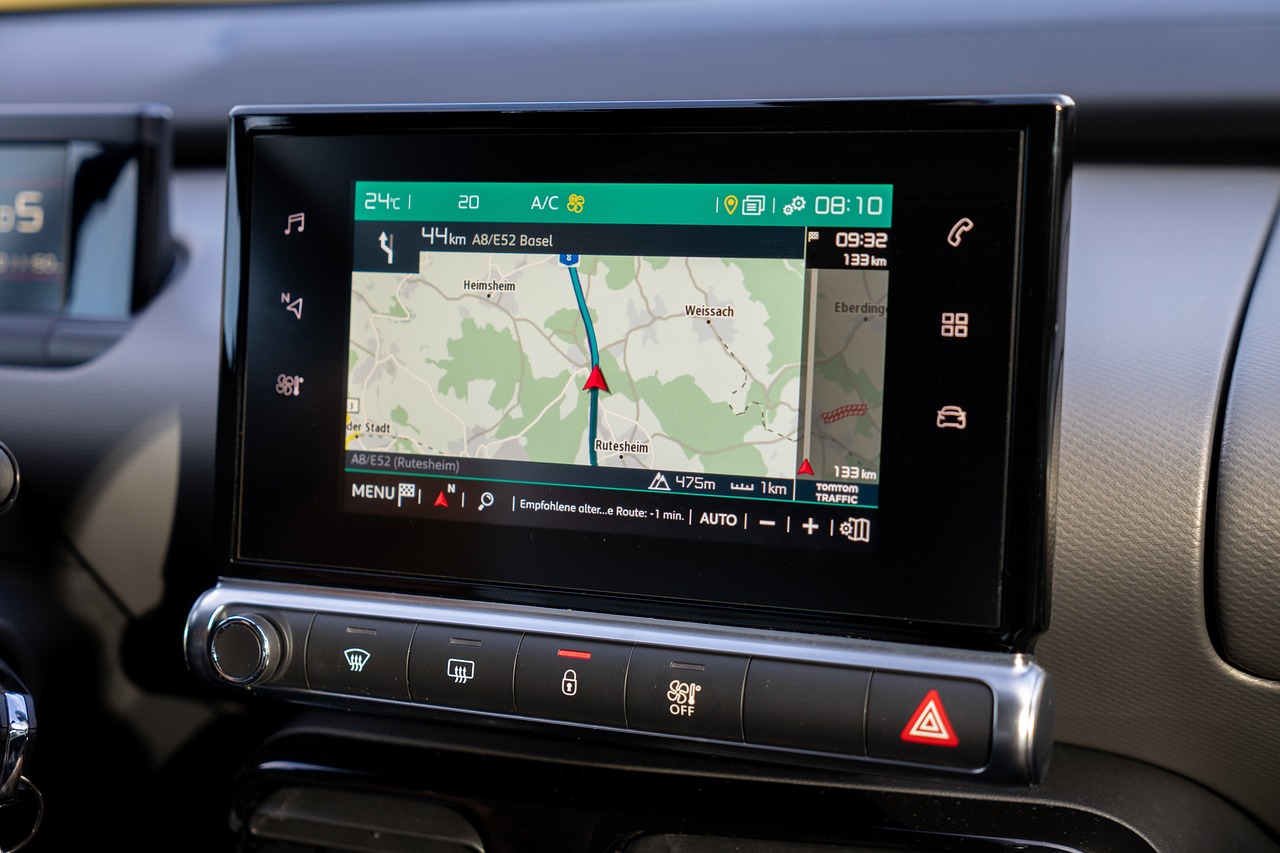
Infotainment systems are among the most visible manifestations of automotive digitalization. What began as simple radios and CD players has evolved into sophisticated digital interfaces combining entertainment, navigation, communication, and vehicle control.
Modern infotainment systems feature high-resolution touchscreens, AI-based voice assistants, and seamless smartphone integration via platforms such as Apple CarPlay and Android Auto. These systems allow drivers to access navigation, messaging, streaming media, and vehicle settings through a unified interface. Increasingly, infotainment platforms are also cloud-connected, enabling real-time traffic updates, over-the-air software upgrades, and personalized user experiences.
Beyond convenience, infotainment systems have become central interaction hubs. They serve as gateways to advanced safety alerts, vehicle diagnostics, and connected services, blurring the boundary between entertainment, information, and vehicle management.
Telematics and Vehicle Networking
While infotainment focuses on user experience, telematics operates largely in the background, enabling vehicles to collect, transmit, and analyze operational data. Telematics systems monitor vehicle health, location, driving behavior, and environmental conditions, supporting applications such as predictive maintenance, fleet management, and usage-based insurance.
Vehicle networking extends telematics through Vehicle-to-Vehicle (V2V) and Vehicle-to-Infrastructure (V2I) communication. These technologies allow cars to exchange information about speed, position, and hazards, enhancing situational awareness and improving traffic safety. For example, vehicles can receive warnings about accidents ahead or coordinate speed adjustments at intersections.
Telematics and networking form the digital backbone of connected mobility, enabling data-driven decision-making at both the vehicle and system-wide levels.
ADAS: The Bridge Toward Autonomous Driving
Advanced Driver Assistance Systems (ADAS) represent a critical step toward autonomous vehicles. Systems such as adaptive cruise control, lane-keeping assistance, automatic emergency braking, and blind-spot monitoring rely on sensor fusion, artificial intelligence, and real-time data processing.
ADAS technologies significantly reduce accident risk by assisting drivers in detecting hazards and responding faster than human reflexes alone. Importantly, these systems also generate vast amounts of data that feed into the development of higher levels of automation.
As ADAS capabilities expand, vehicles increasingly assume responsibility for safety-critical decisions. This gradual transition allows manufacturers, regulators, and drivers to adapt to automation incrementally, laying the foundation for fully autonomous mobility.
5G Connectivity: A Game Changer for Mobility
The introduction of 5G networks marks a turning point in vehicle connectivity. While earlier cellular technologies enabled basic connected services, 5G offers ultra-low latency, high bandwidth, and exceptional reliability – features essential for real-time, safety-critical applications.
5G enables advanced Vehicle-to-Everything (V2X) communication, supporting instantaneous data exchange between vehicles, infrastructure, pedestrians, and cloud platforms. This connectivity is fundamental for coordinated autonomous driving, real-time traffic optimization, and high-definition sensor data sharing.
Additionally, 5G enhances over-the-air software updates, remote diagnostics, and cloud-based AI services. Vehicles can continuously improve after purchase, receiving new features, security patches, and performance optimizations without visiting service centers.
Cybersecurity and Data Privacy Challenges
As vehicles become more connected, cybersecurity and data privacy become paramount. Modern cars handle sensitive data, including location history, driving behavior, and personal user information. At the same time, connectivity increases exposure to cyber threats such as hacking, data breaches, and signal spoofing.
The automotive industry addresses these risks through layered security architectures, encryption, authentication protocols, network segmentation, and continuous monitoring. International standards and regulations – such as ISO/SAE 21434, UNECE WP.29, and GDPR – define requirements for secure vehicle design and data protection.
Cybersecurity is no longer a secondary consideration; it is a core safety requirement. Trust in connected mobility depends on manufacturers’ ability to protect both vehicle systems and user data.
The Broader Impact on the Automotive Industry
Digitalization is reshaping automotive business models as profoundly as vehicle technology itself. Software-defined vehicles enable subscription services, feature-on-demand offerings, and data-driven revenue streams. Traditional manufacturers increasingly compete and collaborate with technology companies, cloud providers, and telecommunications firms.
Connected vehicles also play a growing role in smart cities and sustainable mobility strategies. By integrating with traffic management systems and energy grids, vehicles contribute to reduced congestion, optimized energy use, and lower emissions.
The convergence of connectivity, automation, and data analytics signals a future in which vehicles are active participants in intelligent transportation ecosystems – not isolated machines.
Why the Full Article Matters
This summary outlines the scope and significance of automotive digitalization, but it only scratches the surface. The full article explores each domain – infotainment, telematics, ADAS, 5G, cybersecurity, and future trends – in technical depth, examining architectures, standards, real-world implementations, and strategic implications.
Understanding this transformation is essential not only for industry professionals, but also for policymakers, urban planners, and consumers seeking to grasp how mobility is evolving. Digitalization is redefining what a car is, what it can do, and how it fits into modern life.
The future of mobility is connected, intelligent, and data-driven – and it is already taking shape on today’s roads. Read more at geekub.com